Gentle Regenerative Medicine That Helps Restore Health and Vitality Using Your Own Cells
Our bodies maintain health through an innate capacity for repair and renewal, even as we face daily stress and age-related changes.
Stem cells play a central role in this process, with the ability to differentiate into various cell types and support the repair of damaged tissues.
Among these, autologous adipose-derived stem cells—harvested from a patient’s own fat tissue—are recognized for their highly safety profile, as they carry a low risk of immune rejection or serious adverse reactions.
Recent research suggests these cells may support anti-inflammatory pathways, promote angiogenesis, and assist in tissue repair.
Clinical applications are being explored in areas such as recovery after cancer treatment, chronic disease management, and advanced anti-aging medicine.
At our clinic, we offer autologous adipose-derived stem cell therapy tailored to each patient’s condition and goals.
By working with the body’s natural restorative capacity from within, this therapy provides an option for those seeking to support long-term wellness and a more vibrant daily life.
Features of Our Autologous Adipose-Derived Stem Cell Therapy
- Close collaboration with a CPC (cell processing center) utilizing patented technology developed by a Japanese researcher in Singapore
- Ability to culture a sufficient number of stem cells even from a small amount of adipose tissue
- Capability to expand functionally active stem cells, including in the elderly patients
- Comprehensive infection control and safety measures
-
Features of Autologous Adipose-Derived Stem Cell Therapy
-
High Safety Profile
since this therapy uses a patient’s own tissue, the risk of immune reaction or allergy is extremely low.
Multiple Regenerative Pathways
Stem cells naturally migrate toward sites of tissue damage and may help support:
- Modulation of inflammation
- Tissue repair
- Promotion of angiogenesis (formation of new blood vessels)
They also possess multipotent potential — meaning the capacity to differentiate into vascular, nerve, muscle, and cartilage-related cell types — which is being studied for its role in supporting broad tissue repair.
Wide Range of Investigational Applications
Research has explored potential benefits for:
- Atherosclerosis and vascular conditions
- Chronic pain and joint-related disorders
- Skin rejuvenation and wrinkle improvement
- Liver disease (e.g., cirrhosis)
- Metabolic and neurological conditions
- Anti-aging and wellness medicine
Exosomes and Cytokines
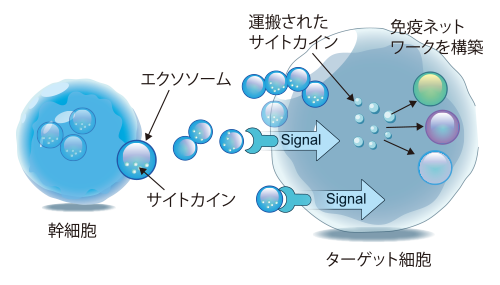
Exosomes and cytokines secreted by stem cells are being studied for their potential role in supporting tissue repair.
Exosomes function as carriers that encapsulate cytokines and deliver them efficiently to target cells.
By protecting cytokines—which are otherwise unstable in the extracellular environment—exosomes may help transport biological signals to distant tissues and cells, contributing to broader biological effects.
Because excessive inflammation can lead to tissue damage, the anti-inflammatory properties associated with exosomes and cytokines are of interest in research focused on tissue protection and repair.
FAQ
- Is the procedure painful when harvesting or injecting the cells?
- Local anesthesia is used during fat tissue collection, so most patients experience minimal discomfort.
Injection of the stem cells is also typically associated with only mild sensation.
For those who prefer additional comfort, inhalation or intravenous sedation can be arranged for an additional fee. - How long do swelling or discomfort last after fat harvest?
- Mild swelling or discomfort at the collection site may last for a few days, but it rarely interferes with daily activities.
Duration and degree of symptoms may vary by individual. - When can I expect to notice results?
- Some patients report noticing changes shortly after treatment, with effects that may last for several months.
Regular treatment sessions may help support longer-term benefits. - How often should the treatment be performed?
- As a general guide, four sessions in the first year are often recommended; however, frequency varies based on each patient’s condition and goals.
Your physician will discuss your needs during the initial consultation and design a personalized plan.
Treatment Process
-
STEP1Consultation & Evaluation
A specialist consultation will be conducted to understand your symptoms and treatment goals.
Blood and urine tests are required to assess eligibility for stem cell culture. -
STEP2Fat Harvest & Cell Culture
Under local anesthesia, a small incision is made to collect a small amount of adipose tissue.
Stem cells are isolated from the tissue and cultured in a controlled environment. -
STEP3Stem Cell Infusion
The cultured stem cells are administered intravenously.
The procedure typically takes about one hour.
Fee Schedule
Consultation Fee
| Consultation (per visit) | Please contact us. |
|---|
Pre-treatment Evaluation
Includes: height, weight, BMI, blood pressure, blood tests (general & infectious), ECG, carotid ultrasound, CT (neck to thigh), thermography (peripheral circulation), MMSE, ABI.
Required to assess eligibility for stem cell culture.
Patients living far away may complete these tests locally and submit results (valid within 3 months). In such cases, no testing fee will be charged by our clinic.
If you wish to bring results from another facility, please inform us at the time of reservation. In such cases, no testing fee will be charged by our clinic.
| Evaluation | Please contact us. |
|---|
Stem Cell Therapy
Includes fat harvesting, stem cell culture and storage, and IV administration.
100 million cells per session, with the option for split dosing available.
Cell storage available for up to 2 years (extension upon consultation).
| per session | Please contact us. |
|---|
Post-treatment Follow-up
Three scheduled follow-up visits are included in the treatment plan.
Fee included in stem cell therapy cost.
Medical Expense Deduction
Although stem cell therapy at our clinic is provided as private, non-insured medical care, it may be eligible for Japan’s medical expense tax deduction if it is received for the purpose of treating illness or injury.
Please note that eligibility varies depending on individual circumstances and the judgment of the tax authorities.
For further details, please consult the tax office or a certified tax accountant.
Our clinic is officially certified by the Ministry of Health, Labour and Welfare of Japan with a “Category II Regenerative Medicine Provision Plan Number.”
Provision Plan Number: PB3250034
Tokyo Ginza Wellness & Aging Clinic is authorized to provide regenerative medical treatments in accordance with the Act on the Safety of Regenerative Medicine, having passed rigorous review by an accredited regenerative medicine committee. We operate under a regulated system to ensure safe and compliant treatment protocols.
Please note: Stem cell therapies may only be performed by licensed medical institutions, physicians, and cell processing facilities that are approved and supervised by the Ministry of Health, Labour and Welfare. These treatments cannot be legally provided at unauthorized clinics or facilities.
Important Information
- Contraindications
-
The following conditions are examples of general criteria. Please contact us for details.
- Severe active infection
- Severe heart disease
- Severe organ dysfunction
- Malignant tumors
- Immunodeficiency
- Pregnancy or breastfeeding
- Possible Side Effects
-
Autologous adipose-derived stem cell therapy may involve the following potential side effects:
Pain or swelling at the fat harvest site
Temporary pain or swelling may occur but typically resolves within a few days.
Inflammation at the injection site
In rare cases, localized inflammation may occur, which usually improves with appropriate care.
Risk of infection
Although rare and minimized with strict sterilization protocols, infection at the procedure site is possible.
Allergic reactions
Extremely rare, but allergic reactions to medications used during treatment may occur.
Begin with a Consultation
At our clinic, you may receive NMN IV therapy in combination with autologous adipose-derived stem cell treatment.
NMN infusions can be administered on the same day as stem cell therapy. If you are interested, please feel free to discuss this option during your consultation.